
Jane Eyre
Jane Eyre
An orphan becomes a governess and refuses every arrangement that would make her less than a person. The house at Thornfield holds a secret the marriage plot cannot step around.
Subject
Dread, old houses, and the uncanny, in the literary sense. Covers, when Open Library has them, are loaded from their cover service. Nothing gothic is stored on this host.
An orphan becomes a governess and refuses every arrangement that would make her less than a person. The house at Thornfield holds a secret the marriage plot cannot step around.
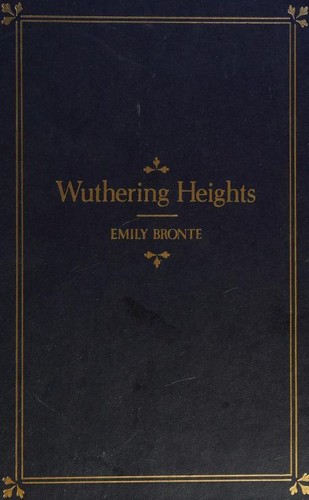
by Emily Brontë
Heathcliff and Catherine’s attachment wrecks two households across two generations. The story is told by a tenant and a housekeeper, never by the pair at its center.

by Mary Shelley
Victor Frankenstein builds a living being and then abandons it. The creature’s education, and Victor’s refusal to answer for what he made, are the book’s real experiment.

by Bram Stoker
Jonathan Harker’s travel diary opens onto a count who intends to move to London. The rest of the novel is a coalition of notes, blood, and timetables trying to stop him.

by Oscar Wilde
A young man wishes that a portrait would age in his place. Wilde’s only novel follows the wish into influence, cruelty, and a picture locked in a room.
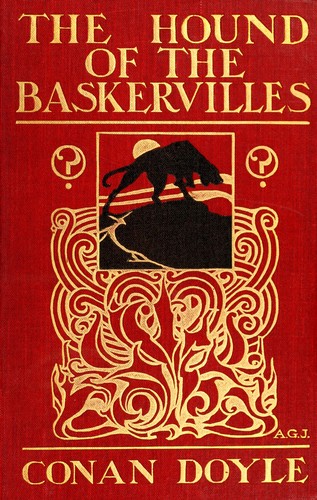
A family legend about a hound on the Devon moor brings Holmes out of a silence Doyle had meant to be permanent. The rational explanation has to earn its place against the fog.

A London lawyer tries to understand the tie between a respectable doctor and a violent man who shares his house. Stevenson’s short novel is a study of a self split on purpose.

A woman confined to a room for her health begins to watch the pattern in the wallpaper. Gilman’s story is brief and does not offer the cure the physician promised.

Hester Prynne wears a letter the town requires, while the father of her child stays unnamed. Hawthorne’s novel is about punishment as a public art.

by Jane Austen
Although the title page is and the novel was published posthumously in 1817 with Persuasion, Northanger Abbey was completed. From a fondness of Gothic novels and an active imagination distorting her worldview, the story follows Catherine Morland, the naïve young protagonist, as she develops a better understanding of herself and the world around her.

The Phantom of the Opera was first published as a serial in Le Gaulois from 23 September to 8 January, and was released in volume form in late March by Pierre Lafitte. The Phantom of the Opera is partly inspired by historical events at the Paris Opera during the nineteenth century, and by an apocryphal tale concerning the use of a former ballet pupil's skeleton in a production of Carl Maria von Weber's Der Freischütz.

An Occurrence at Owl Creek Bridge was originally published by the San Francisco Examiner and was first collected in Bierce's book Tales of Soldiers and Civilians. Bierce's abandonment of strict linear narration in favor of the internal mind of the protagonist is an early example of the stream-of-consciousness narrative mode.

Mosses from an Old Manse is a short story collection by Nathaniel Hawthorne, first published.

The Haunted Man and the Ghost's Bargain: A Fancy for Christmas-Time is a novella by Charles Dickens first published. The Haunted Man and the Ghost's Bargain is the last of Dickens's five Christmas novellas, following A Christmas Carol, The Chimes, The Cricket on the Hearth and The Battle of Life.

"To Be Read at Dusk" is a short story written by Charles Dickens, first published in The Keepsake.

The Cask of Amontillado, set in an unnamed Italian city at Carnival time, concerns a man taking fatal revenge on a friend who, he believes, has insulted him. Like several of Poe's stories, and in keeping with the 19th-century fascination with the subject, the narrative follows a person being buried alive – in this case, by immurement.

The Masque of the Red Death stays with Prince Prospero's attempts to avoid a dangerous plague, known as the Red Death, by hiding in his abbey. He, along with many other wealthy nobles, hosts a masquerade ball in seven rooms of the abbey, each decorated with a different color.

by Bram Stoker
The Lair of the White Worm was first published by Rider and Son of London, the year before Stoker's death, with colour illustrations by Pamela Colman Smith. The Lair of the White Worm is based on the legend of the Lambton Worm.

Kwaidan: Stories and Studies of Strange Things (怪談, Kaidan; also archaic romanized Kwaidan), often shortened to Kwaidan ("ghost story"), is a 1904 book by Koizumi Yakumo (Lafcadio Hearn) that features several Japanese ghost stories and a brief non-fiction study on insects.

The History of Caliph Vathek was composed in French beginning, and then translated into English by Reverend Samuel Henley in which form it was first published in without Beckford's name as An Arabian Tale, From an Unpublished Manuscript, claiming to be translated directly from Arabic.

Her fourth and most popular novel, The Mysteries of Udolpho tells of Emily St. Aubert, who suffers misadventures that include the death of her mother and father, supernatural terrors in a gloomy castle, and machinations of Italian brigand Signor Montoni.

by Bram Stoker
The Jewel of Seven Stars is a first-person narrative of a young man pulled into an archaeologist's plot to revive Queen Tera, an ancient Egyptian mummy. The Jewel of Seven Stars explores common fin de siècle themes such as imperialism, the rise of the New Woman and feminism, and societal progress.

The Beetle: A Mystery initially sold more copies than Bram Stoker's Dracula, a similar supernatural horror story published in the same year.

A Sicilian Romance was her second published work, and was first published anonymously.

The House on the Borderland is a hallucinatory account of a recluse's stay at a remote house, and his experiences of supernatural creatures and otherworldly dimensions. Lovecraft praised The House on the Borderland and other works by Hodgson at length.

Uncle Silas: A Tale of Bartram-Haugh is a first-person narrative told from the viewpoint of one of the main characters. Despite Le Fanu resisting its classification as such, the novel has also been hailed as a work of sensation fiction by contemporary reviewers and modern critics alike.

The Mummy's Foot relates the fantastical tale of a contemporary man and the adventures which befall him when he ventures into a Parisian curiosity shop and buys the four-thousand-year-old foot of Princess Hermonthis.

The Damned Thing 1898, From "In the Midst of Life" first appeared in Town Topics.

Ormond; Or, The Secret Witness. Focuses on the ways in which individuals change in reaction to their social environments. Ormond; Or, The Secret Witness. Stays with a female protagonist Constantia and her relationship with the mysterious Ormond.

by Mary Wollstonecraft Shelley
Frankenstein; Or, The Modern Prometheus recounts Victor Frankenstein, a young scientist who creates a sapient creature from different body parts in an unorthodox scientific experiment. Shelley started writing the story when she was 18 and staying in Bath, and the first edition was published anonymously in London on 1 January, when she was 20.

The Heroine is a quixotic satire, in which the protagonist displays the hallmarks of "heroinism" exemplified by Germaine de Staël's novel Corinne ou l'Italie and goes through a series of Gothic adventures inspired by Ann Radcliffe's novels.

St. Leon: A Tale of the Sixteenth Century is eighteenth-century British philosopher William Godwin's fourth novel. Following the success of Things as They Are; or, The Adventures of Caleb Williams, Godwin searched for a topic that would capture his imagination as much as his earlier work.

St. Martin's Eve: A Novel takes its name from the festival of St. Martin's Day, held on November 11, the festivities for which in some countries commence on the previous evening; many of the critical events of the novel occur on this date over several years.

The Romance of the Forest, interspersed with some pieces of poetry combines an air of mystery and suspense with an examination of the tension between hedonism and morality. The Romance of the Forest, interspersed with some pieces of poetry was her first major success, going through four editions in its first three years, and establishing her reputation as a leading figure in the Gothic romance genre.