Twain’s river books look like boyhood adventures and keep turning into arguments about conscience, fraud, and American speech. Huckleberry Finn is the one that refuses a tidy moral.
Huck Finn fakes his death and rafts the Mississippi with Jim, who is escaping enslavement. Twain’s novel is funny, and it does not let the joke forgive the country it travels.
The Adventures of Tom Sawyer, Complete is set in the 1830s–1840s in the fictional town of St. Petersburg, which is based on Hannibal, Missouri, where Twain lived as a boy. In the novel, Sawyer has several adventures, often with his friend Huckleberry Finn.
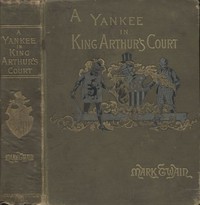
A Connecticut Yankee in King Arthur's Court was originally titled A Yankee in King Arthur's Court. Some early editions are titled A Yankee at the Court of King Arthur.
Tom Sawyer, Detective is a sequel to The Adventures of Tom Sawyer, Adventures of Huckleberry Finn, and Tom Sawyer Abroad. Tom Sawyer attempts to solve a mysterious murder in this burlesque of the immensely popular detective novels of the time.
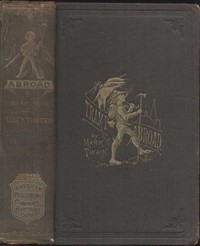
A Tramp Abroad details a journey by the author, with his friend Harris (a character created for the book, and based on his closest friend, Joseph Twichell), through central and southern Europe. While the stated goal of the journey is to walk most of the way, the men find themselves using other forms of transport as they traverse the continent.
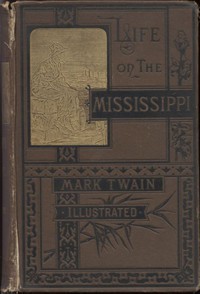
Life on the Mississippi is also a travel book, recounting his trips on the Mississippi River, from St. Louis to New Orleans and then from New Orleans to Saint Paul, many years after the war.
Extract from Captain Stormfield's Visit to Heaven first appeared in print in Harper's Magazine in December and January, and was published in book form with some revisions. This was the last story published by Twain during his life.
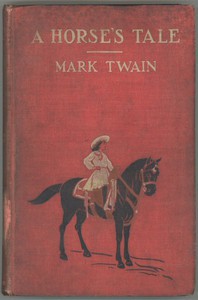
A Horse's Tale is a novel written by American author Mark Twain (Samuel Clemens), written partially in the voice of Soldier Boy, who is Buffalo Bill's favorite horse, at a fictional frontier outpost with the U.
"The Man That Corrupted Hadleyburg" is a satirical novella by Mark Twain. It first appeared in Harper's Monthly in December, and was subsequently published by Harper & Brothers in the collection The Man That Corrupted Hadleyburg and Other Stories and Essays.
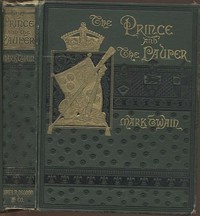
The Prince and the Pauper was first published Canada, before its publication in the United States. The Prince and the Pauper represents Twain's first attempt at historical fiction.
Extracts from Adam's Diary, translated from the original ms was first published in The Niagara Book, and was collected in Twain's book My Debut as a Literary Person with Other Essays and Stories. "Extracts from Adam's Diary" was first published as a book by Harper & Brothers, with numerous illustrations by Frederick Strothmann.
Is Shakespeare Dead? From My Autobiography explores the controversy over the authorship of the Shakespearean literary canon via satire, anecdote, and extensive quotation of contemporary authors on the subject.
Fenimore Cooper's Literary Offences draws on examples from The Deerslayer and The Pathfinder from Cooper's Leatherstocking Tales. The essay is characteristic of Twain's biting, derisive, and highly satirical style of literary criticism, a form he also used to deride such authors as Oliver Goldsmith, George Eliot, Jane Austen, and Robert Louis Stevenson.
A Dog's Tale first appeared in the December issue of Harper's Magazine. In January of the following year it was extracted into a stand-alone pamphlet published for the National Anti-Vivisection Society.
Adventures of Huckleberry Finn, Chapters 01 to 05 is commonly named among the Great American Novels, and it is among the first in major American literature to be written throughout in vernacular English, characterized by local color regionalism. Being the direct sequel to The Adventures of Tom Sawyer, it is told in the first person by Huckleberry "Huck" Finn, the narrator of two other later Twain novels (Tom Sawyer Abroad and Tom Sawyer, Detective) and a friend of Tom Sawyer.
Chapters from My Autobiography are 25 pieces of autobiographical work published by American author Mark Twain in the North American Review between September and December. Rather than following the standard form of an autobiography, they comprise a rambling gathering of anecdotes and ruminations.